
Home / Blog / Learning expedition
Practical guideWhat is a learning expedition? Definition, format and benefits.
A short, dense format built for decision-making. What sets a learning expedition apart from a study trip, and what it actually delivers for an executive team.
 By Thomas Idoux, Managing Director of UDI Africa · Published on · Updated on
A learning expedition is a professional trip organised for a group of executives or senior managers, over a short period, built around a single theme. The group meets people on the ground: companies, industrial operators, institutions, investors, regulators. It is neither a trade show, nor a seminar held somewhere else, nor a general-purpose trade mission.
The difference comes down to three things. A single theme instead of a broad overview. Meetings chosen around each participant's actual project, instead of protocol visits. And a debrief that turns impressions into a decision.
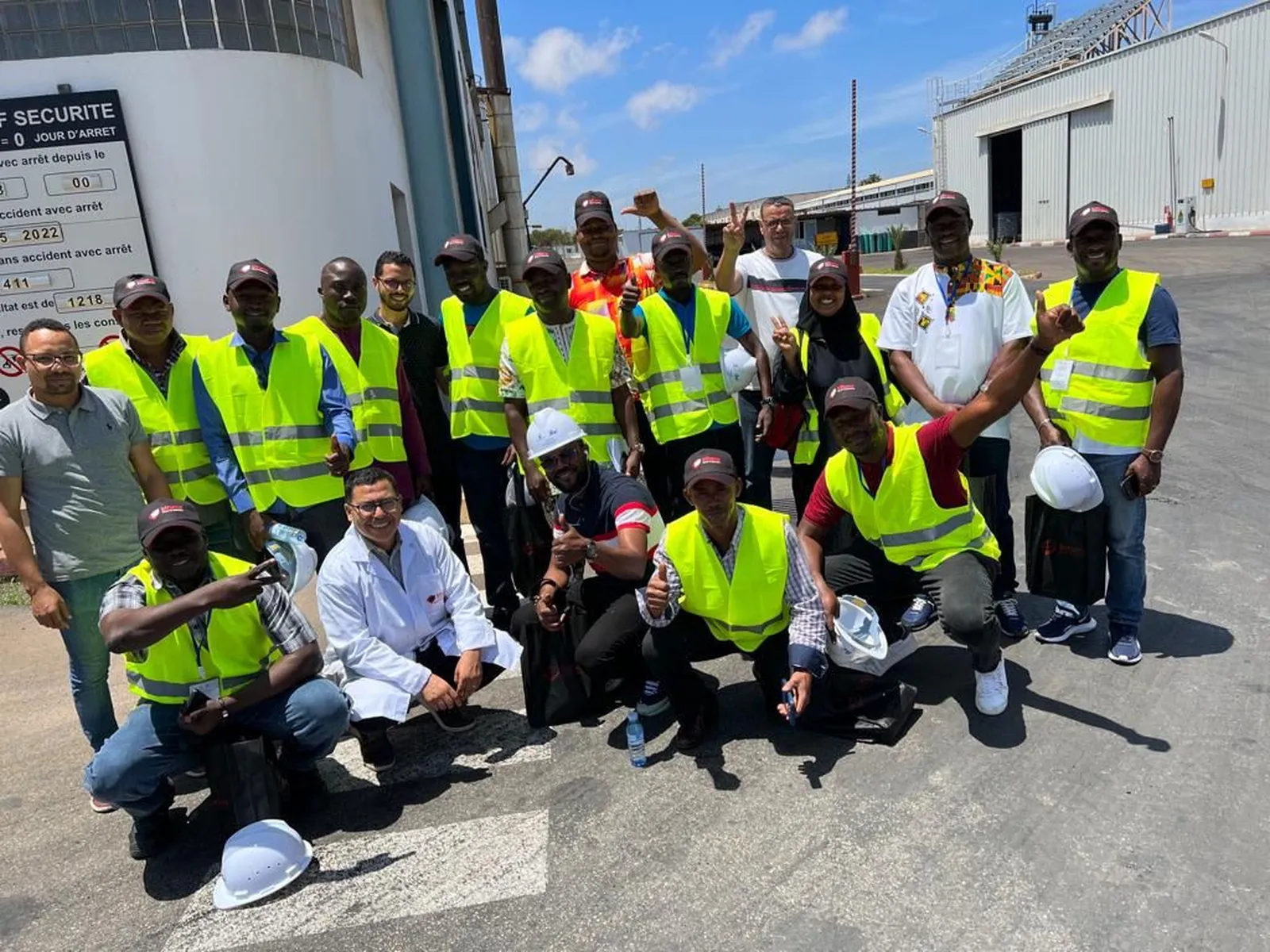
What a learning expedition delivers
An understanding no report can give you
An executive can read ten market studies without knowing whether they actually want to go there. Three days on the ground - seeing sites, supply chains, teams and real payment terms - produces either conviction or a clear no. Both have value. Walking away early costs far less than a bad market entry.
Qualified meetings, not courtesy visits
This is the core of the value, and it's what separates a serious learning expedition from a programme of visits. Each participant meets people selected around their own question: a potential partner, a supplier, a client, a banker, legal counsel. A 2009 Oxford Economics study estimated that a face-to-face meeting converted around 40% of prospects, against 16% without one. The number has aged, but the underlying mechanics haven't: you don't sign with a country, you sign with people.
A format that actually fits an executive's calendar
Two to three days, a single meeting point on arrival, shuttles, accommodation and meals all handled. Beyond three days, the target audience stops showing up: an SME or mid-cap executive won't be away for a week. Dense doesn't mean packed - without breathing room between sessions, nothing actually sinks in.
A network that outlasts the trip
Fifteen to twenty non-competing executives spending three days together, with the same questions and different industries, produce exchanges no conference room can replicate. It's the most underrated benefit at the point of purchase, and the one most often cited afterwards. A closing session where every participant commits to their next step within thirty days carries it through.
What a learning expedition is not
- An incentive trip. The setting is comfortable, but the agenda is a working agenda. The budget is a development budget, not a reward budget.
- A whistle-stop tour. One country, one sector, one question. The programmes that fail are the ones stacking eight visits with no thread running through them - by the sixth site, nobody can tell them apart.
- A guarantee. It replaces neither a market study, nor due diligence, nor a regulatory audit. It's there to help you decide whether to commission them, and with whom.
Two formats, two uses
The inter-company expedition brings together executives from different companies on fixed dates, around an announced theme. It's the entry format: controlled cost per person, a genuine network effect, no team of your own to mobilise.
The private expedition is built for a single organisation - an executive committee, an industry group, a federation - and calibrated to its exact question. The programme, the contacts and the dates are defined with you. It's the format to choose when the decision is already on the table. Both formats are detailed on our Learning Expeditions in Morocco page.
Why Morocco
Three hours' flight from Paris, Brussels or Geneva, no time difference, French as the working language, and a real industrial base to see first-hand: automotive, aerospace, agrifood, renewable energy, desalination. On water specifically, the World Bank ranks Morocco among the most water-stressed countries in the world and estimates the resource could fall below the severe-scarcity threshold by 2030 - which has triggered an infrastructure programme documented in detail in its Country Climate and Development Report. European companies in the sector find a market that's ahead of where southern Europe currently stands.
Our next inter-company edition covers exactly this: Water and Hydric Resilience, 23-25 March 2027. We build these programmes the same way we build our other corporate events, following our methodology.
Frequently asked questions
A trade mission targets volume: many companies, many meetings, a business-generation goal. A learning expedition targets a decision: a small group, a single theme, and meetings calibrated to each participant's project.
Two to three days for an executive format. Beyond that, attendance drops regardless of how compelling the programme is. A four-to-five-day format is only justified for a private group covering several cities.
Between fifteen and twenty-four people for the inter-company format, split into smaller groups for site visits to protect the quality of the exchanges. Up to thirty for the private format, where participants already know each other.
Pricing is quoted all-inclusive on the ground, excluding flights: shuttles, accommodation, meals, programme, guidance and documentation. It varies with duration, standing and how dense the programme is. The exact price for each edition is listed on its own page. For a private format, pricing is quoted after an initial conversation.
A learning expedition to prepare?
Let's talk about your market, your question, and the right format. Free, no-commitment initial conversation.
Prepare my learning expedition →